
Last Updated on October 13, 2026 by Beth Skwarecki
Palmar hyperhidrosis treatment is usually not surgical at first. Most people with persistently sweaty hands can find relief with noninvasive or minimally invasive options, including prescription antiperspirants, iontophoresis, and injections. Surgery may be considered only when severe symptoms continue despite appropriate treatment and interfere substantially with work, daily activities, or quality of life.
Sweaty palms can make handshakes, typing, holding tools, driving, sports, and handling paper uncomfortable. They can also create real social stress. However, having sweaty hands does not automatically mean surgery is necessary. A careful evaluation helps identify the cause of sweating and the most appropriate palmar hyperhidrosis treatment plan.
What Is Palmar Hyperhidrosis?
Palmar hyperhidrosis is excessive sweating of the hands that occurs beyond what the body needs for cooling. It may happen even in a cool room, while resting, or without obvious physical activity. Some people notice that stress, caffeine, heat, or social situations make symptoms worse, but these triggers do not fully explain the condition.
Primary palmar hyperhidrosis generally affects the hands without an underlying medical cause. Secondary sweating can result from medications, hormonal changes, thyroid conditions, low blood sugar, infections, neurological conditions, or other health concerns. A healthcare professional may need to rule out these factors before recommending treatment.
For people researching options, My Sweaty Palms provides information about what is ETS surgery and why it is generally considered only after other palmar hyperhidrosis treatment options have been explored.
How Palmar Hyperhidrosis Treatment Usually Begins
Treatment is typically stepped, meaning a clinician starts with lower-risk options and adjusts the plan based on symptom severity, affected areas, side effects, and results. The goal is not necessarily to eliminate every drop of sweat. It is to reduce sweating enough that it no longer controls daily decisions.
| Treatment option | How it may help | Important consideration |
|---|---|---|
| Clinical-strength antiperspirant | Temporarily reduces sweat at the skin surface | Can irritate the skin if applied to damp or broken skin |
| Iontophoresis | Uses a mild electrical current to reduce palm sweating | Requires regular sessions and maintenance |
| Botulinum toxin injections | Temporarily blocks nerve signals to sweat glands | Hand injections can be uncomfortable and may cause temporary weakness |
| Oral medication | May reduce sweating in several body areas | Can cause dry mouth, constipation, blurred vision, or overheating |
| ETS surgery | Interrupts nerve signals involved in sweating | Can cause permanent side effects, including compensatory sweating |
The right palmar hyperhidrosis treatment depends on the person. For example, someone whose sweating mainly affects hands may benefit from iontophoresis, while a person with sweating in several body areas may need a different approach.
Nonsurgical Options for Sweaty Hands
Prescription Antiperspirants
Prescription-strength antiperspirants may be recommended for mild to moderate symptoms. These products are usually applied to dry skin, often before bedtime. They can help some people, but palms can be challenging because frequent handwashing and daily activities may reduce how long the product stays on the skin.
Skin irritation is a common concern. A clinician can provide instructions about timing, skin care, and how often to use the product.
Iontophoresis
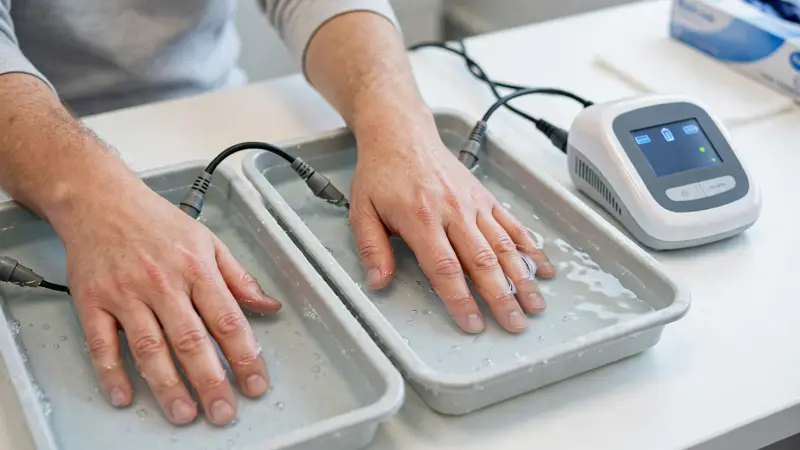
Iontophoresis is often a practical option for palmar hyperhidrosis treatment. During a session, the hands are placed in shallow trays of water while a gentle electrical current passes through the water. The treatment is thought to reduce sweat-gland activity temporarily.
Several sessions are usually needed before results become noticeable. Once sweating improves, maintenance sessions may be needed weekly or every few weeks. Some people use an approved device at home after receiving appropriate guidance from a clinician.
Botulinum Toxin Injections
Botulinum toxin injections can reduce excessive sweating by temporarily blocking the nerve signals that trigger sweat glands. Results can last for several months, although timing varies by person.
Because the palms contain many nerve endings, injections may be uncomfortable. Temporary hand weakness is also possible, which matters for people whose work requires strong grip or fine hand movements. Discussing these tradeoffs beforehand is essential.
When Oral Medication May Be Considered
A clinician may consider oral medication when sweating affects several areas, when local treatments have not provided enough relief, or when someone needs additional support for specific situations. These medicines can reduce sweat production throughout the body.
However, whole-body treatment also means whole-body side effects are possible. Depending on the medication, someone may experience dry mouth, constipation, urinary symptoms, blurred vision, drowsiness, or difficulty cooling down in hot conditions.
Oral medication should only be started and adjusted under medical supervision. It may not be appropriate for people with certain medical conditions or for those taking medications that could interact with it.
When Does Surgery Become an Option?
Endoscopic thoracic sympathectomy, commonly called ETS, is a procedure that interrupts certain sympathetic nerve signals involved in sweating. It is most often discussed for severe palmar hyperhidrosis that has not improved with other treatments.
Surgery may be worth discussing when all of the following apply:
- Sweaty hands are severe, frequent, and persistent.
- Symptoms affect work, education, relationships, or basic daily tasks.
- Nonsurgical palmar hyperhidrosis treatment options have been used correctly without sufficient relief.
- The person understands that surgery is not reversible in the same way as topical treatments or injections.
- A qualified specialist has reviewed the benefits, risks, and alternatives.
This does not mean surgery is the “best” option for every severe case. It means that the potential benefit may be worth considering after a full discussion and realistic expectations.
The Main Risk: Compensatory Sweating
The most important risk to understand before ETS is compensatory sweating. After surgery reduces sweating in the hands, the body may sweat more heavily in other areas, such as the chest, back, abdomen, groin, or legs.
For some people, compensatory sweating is mild and manageable. For others, it can be more troubling than the original hand sweating. Because the effect can be long-lasting, a surgeon should explain this possibility clearly before the procedure.
Other potential risks may include pain, bleeding, infection, excessive dryness, changes in sensation, or incomplete symptom relief. Individual risk depends on health history, surgical technique, and other factors.
Choosing the Right Specialist
A dermatologist is often a useful first specialist for palmar hyperhidrosis treatment. They can confirm the diagnosis, review medications and medical history, and guide nonsurgical treatment options. If surgery is being considered, a referral to an experienced thoracic surgeon may be appropriate.
Before an appointment, keep a short sweat journal. Include when symptoms happen, whether they occur during sleep, which body areas are affected, possible triggers, treatments already tried, and how sweating changes your day. This helps the clinician recommend care based on your real needs rather than a one-size-fits-all plan.
FAQs
Symptoms may fluctuate, but persistent excessive hand sweating often needs management. A clinician can help identify whether it is primary hyperhidrosis or related to another health issue.
No. ETS is generally reserved for selected people with severe symptoms that have not improved with less invasive options.
Yes, especially if sweating is new, worsening, unexplained, affects daily life, or occurs with symptoms such as weight loss, fever, chest pain, fainting, or night sweats.

Beth is Cloudmineinc’s senior health editor and a certified personal trainer. She has over 10 years experience as a science journalist and is the author of two books. She deadlifts over 315 lbs.